
The highlight of Bangkok
Book a private tour of the Grand Palace and Wat PhoMany travellers heading to Southeast Asia or Thailand start or end their trip in Bangkok. A few days in this city, where East and West, modern and traditional blend together, are more than worth it – and the Grand Palace tops almost everyone’s list.
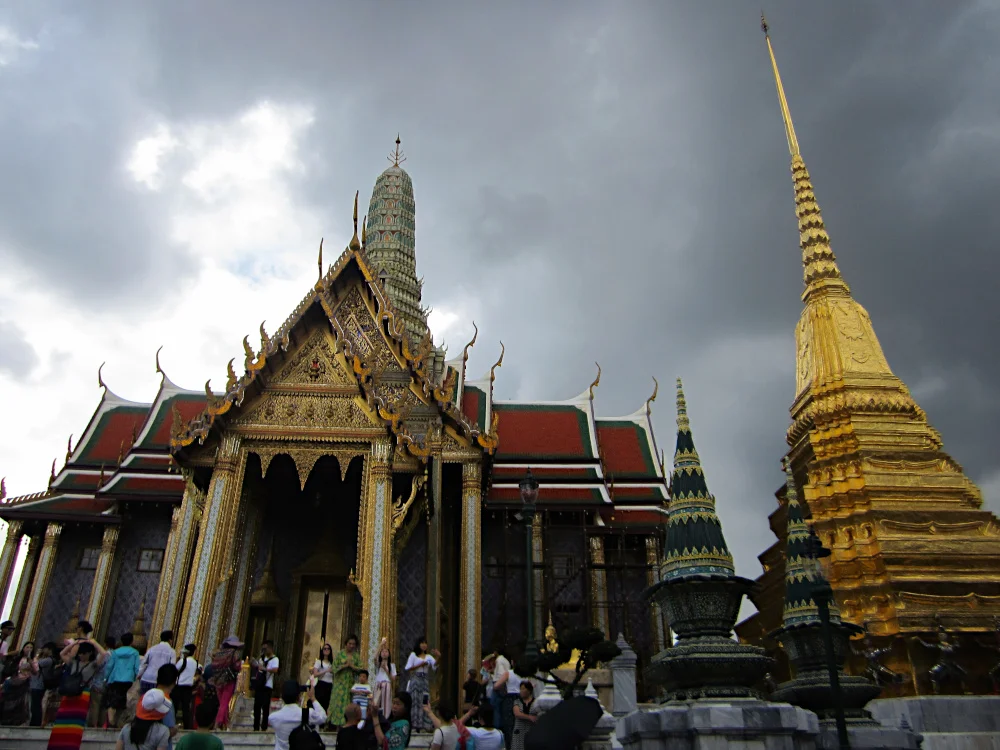
One of the absolute highlights of Bangkok, or Krung Thep (“City of Angels”, as the Thai call their own capital), is the impressive, fairy-tale-like Grand Palace, together with ‘Wat Phra Kaew’, the Temple of the Emerald Buddha. The complex sits on Rattanakosin Island, the historic heart of Bangkok.
Before you go: around the Grand Palace, you’ll regularly run into well-dressed people who tell you the palace is “closed today.” This is never true – it’s a well-known scam to lure you into a tuk-tuk tour or a tailor shop. Politely ignore them and keep walking to the main entrance. Later in this article, we explain exactly how to spot and avoid this and other scams.

By clicking the video, it will be loaded from YouTube. By doing so, you accept YouTube’s cookies and terms. See our Privacy Policy.
The Royal Palace, or the Grand Palace, is definitely one of Bangkok’s ‘must-sees’. Together with Wat Pho, the temple with the giant reclining Buddha, which is located nearby, these are the two main attractions you really must visit in Bangkok.
As well as visiting the Grand Palace, there are plenty of other sights in Bangkok that you shouldn’t miss.
Haven’t booked a hotel in Bangkok yet? Check out our guide to the best hotels in Bangkok.
The History of the Grand Palace
In 1782, Rama I, the first king of the Chakri dynasty, moved the new capital of Thailand (then still known as Siam) from Thonburi on the west bank of the Chao Phraya River to Rattanakosin Island in Bangkok on the east bank. He did this to make the capital less vulnerable in the event of another invasion from Burma.
Until then, the island was mainly inhabited by a large Chinese community, who were ordered by the king to move to a new location further south. This is what is now Bangkok’s Chinatown (Thanon Yaowarat). The centre of the area is the open field of the Royal Ground (Sanam Luang), where many festivals and ceremonies are held on behalf of, in the presence of, or in honour of the royal family.
The first buildings of the Royal Palace were made of wood. A few years later, the king would replace them with stone structures. To obtain sufficient building materials for all the walls, forts, gates, throne rooms and royal residential buildings, he had stones from the ruins of the destroyed Ayutthaya transported by boat along the Chao Phraya River.
During the Rattanakosin period, when the King of Thailand held absolute power (from 1782 to 1932), the Grand Palace served as the residence of the Chakri kings and was also the country’s administrative and religious centre. It was the principal residence of the king and the seat of government. Thousands of people, from servants and guards to ministers and princesses, lived within the palace walls.

In 1925, the Dusit Palace Complex was to become the official new royal residence. An increasing number of ministries were also moving out of the Royal Palace to other parts of Bangkok, as there was simply not enough space within the old palace walls to accommodate the ever-expanding government departments.
A fairytale palace
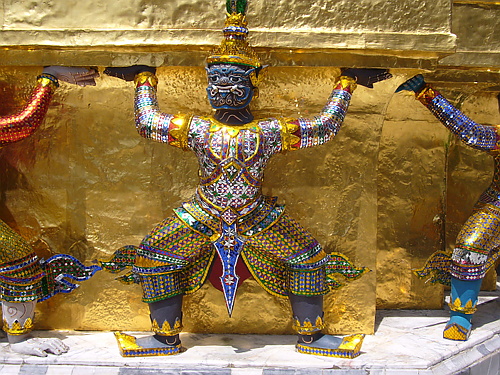
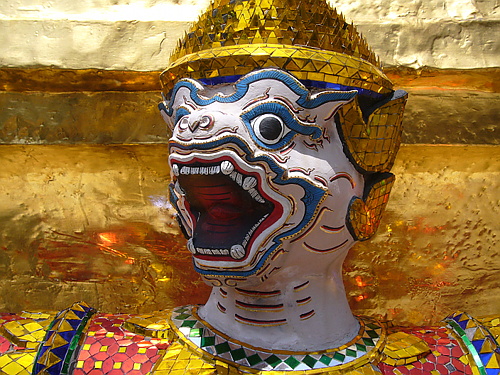
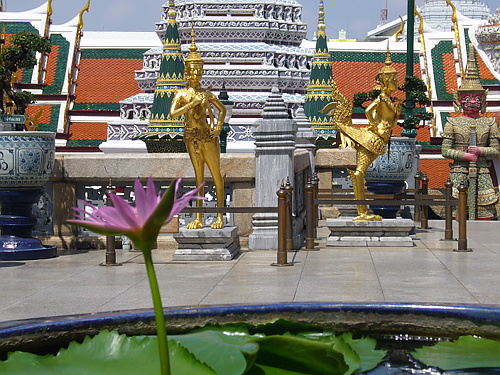
The Grand Palace, or Royal Palace, is effectively a city within a city. It is a magnificent and colourful walled complex filled with golden temples. The temple area is filled with golden chedis, beautifully decorated prangs, mythological elephants, immense garudas and gigantic, fearsome temple guardians. These temple guardians, known as Yaks or Yaksha’s, are said to protect the temple gate and keep evil spirits at bay.

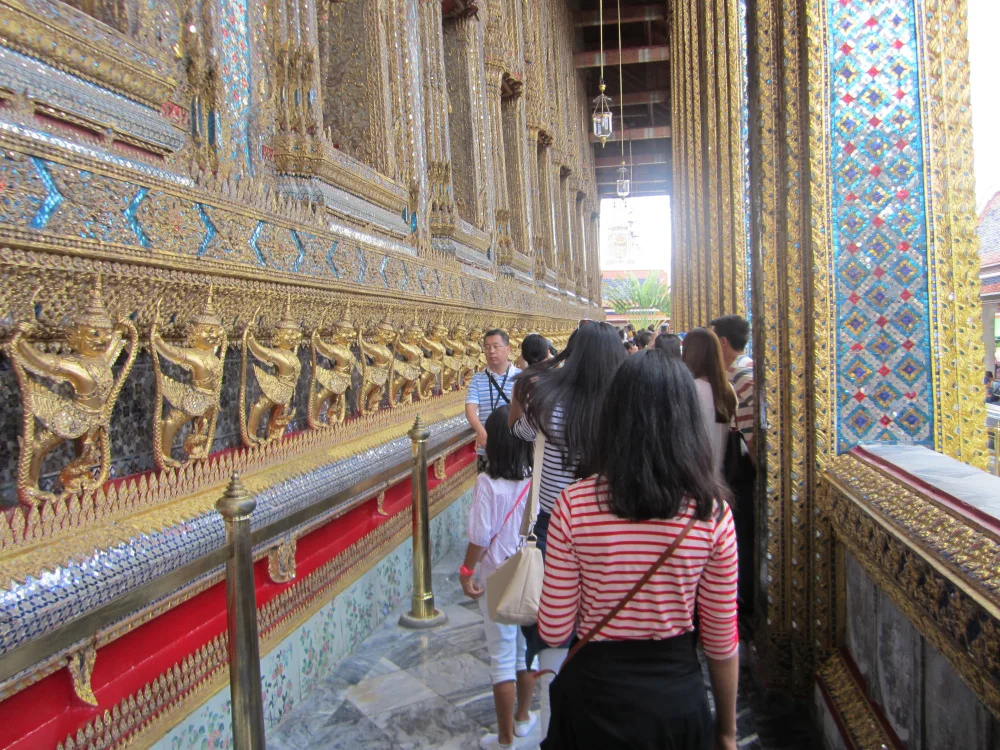
The gardens, featuring beautiful bonsai trees, are also impressive. Most of the sights may be filmed and photographed, but not all of them! Please note that the rules regarding photography and dress (shoulders and knees must be covered) are strict due to the great significance of the Royal Palace and the temple.
A visit to the Grand Palace clearly demonstrates the Thai royal family’s close ties to Buddhism. It is definitely one of the ‘must-do and must-see’ attractions when visiting Bangkok and brings the glorious days of ‘Anna and the King of Siam’ back to life. A visit you’ll never forget!

By clicking the video, it will be loaded from YouTube. By doing so, you accept YouTube’s cookies and terms. See our Privacy Policy.
Wat Phra Kaew temple with the Emerald Buddha
The most sacred part of the Grand Palace is the Wat Phra Kaew temple, home to the Emerald Buddha, or Phra Kaeo Morakot. The Grand Palace is busy everywhere, but it is incredibly crowded around the Emerald Buddha.
This statue is Thailand’s most important religious symbol, despite its small size (66 cm high). The statue stands on a pedestal. It is not made of emerald but of jade; however, jade was not yet known when the statue was given its name.
In summer, the statue wears a crown and jewellery; in winter, a golden scarf; and during the rainy season, a gilded monk’s robe with a headdress. The ritual of changing these garments is reserved for the king or the crown prince.
Ask your Thai guide about the history of the Emerald Buddha.
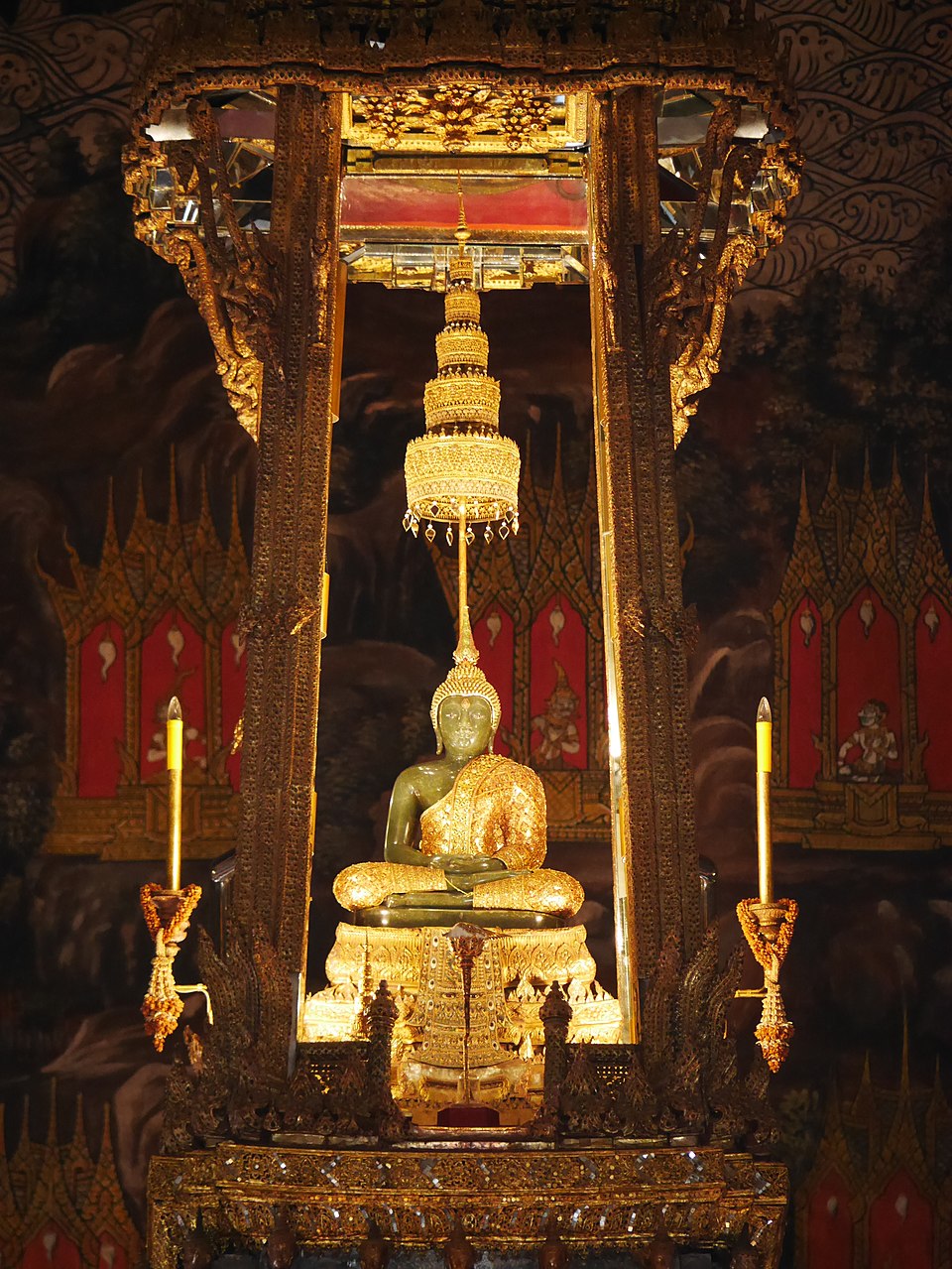
Photo by กสิณธร ราชโอรส – Licensed under the Creative Commons Attribution-Share Alike 4.0 International license. No changes were made.
Visitor information for the Royal Palace and Wat Phra Keo
Strict dress code for visiting the Royal Palace or Grand Palace
This is one of Thailand’s holiest sites. Visitors must be dressed appropriately before entering the Royal Palace and the temple. Men must wear long trousers and a shirt with sleeves – no tank tops. Women must wear a long skirt and no short skirts, see-through clothing or bare shoulders. Shoulders must be covered!
Visitors who arrive improperly dressed are directed to the private clothing stalls right outside the main gates, where they must buy cheap elephant pants or t-shirts (usually around 150–200 Baht).
Location and opening hours
Location: Na Phralan, Phra Nakorn (Grand Palace complex), Old City (Rattanakosin), Bangkok.
Opening hours: 08:30 – 16:30 (last admission at 15:30)
Admission: 500 baht per person
Beware of scams
All around the Grand Palace, and certainly near the pier, you’ll come across smartly dressed people posing as government officials or university students. They will approach you in English and tell you that the Grand Palace is (temporarily) closed. That’s nonsense; just politely ignore them and carry on. These people are trying to lure you into a (free) tour by tuk-tuk or minivan, taking you past tailors and other shops.
Frequently asked questions about the Grand Palace
What are the opening hours and admission price for the Grand Palace?
The Grand Palace is open daily from 08:30 to 16:30. Please note: last admission is at 15:30, so make sure you arrive on time. The entrance fee is 500 baht per person. Allow plenty of time for your visit, as this extensive complex has a lot to offer and can get quite busy, especially at the Temple of the Emerald Buddha.
What is the dress code for visiting the Grand Palace?
The Grand Palace has very strict dress codes as it is one of Thailand’s holiest sites. Men must wear long trousers and a shirt with sleeves (no tank tops). Women must wear a long skirt with no bare shoulders, short skirts or see-through clothing.
What is the Emerald Buddha and why is it so important?
The Emerald Buddha (Phra Kaeo Morakot) is housed in the Wat Phra Kaew temple within the Grand Palace complex and is Thailand’s most important religious symbol. Despite its name, the statue is not made of emerald but of jade, jade was unknown at the time the statue was given its name. The statue is only 66 cm tall and stands on a pedestal. A special ritual involves the King or Crown Prince changing the statue’s robes three times a year: in summer it wears a crown and jewellery, in winter a golden shawl, and in the rainy season a gilded monk’s robe with a headdress.
Can I take photos anywhere in the Grand Palace?
Most of the sights within the Grand Palace may be filmed and photographed, but not all of them. Please pay close attention to the signs setting out the photography rules. In some sacred areas, such as the Emerald Buddha shrine, photography is prohibited out of respect for the religious significance of the site.
How can I avoid scams at the Grand Palace?
In the area around the Grand Palace, particularly near the pier, you’ll come across smartly dressed people posing as government officials or university students. They’ll tell you in English that the Grand Palace is temporarily closed and offer a ‘free’ tuk-tuk or minivan tour. This is a scam designed to lure you to tailors and shops. The Grand Palace is open as usual during its regular opening hours. Ignore these people politely and walk straight to the real entrance.
Why is the Grand Palace referred to as a ‘city within a city’?
The Grand Palace is truly a walled complex that functioned as a complete city. From 1782 to 1932, it was not only the residence of the Chakri kings, but also the administrative and religious centre of Thailand. Thousands of people lived within the palace walls: from servants and guards to ministers and princesses. The complex consists of golden temples, chedis, beautifully decorated prangs, gardens with bonsai trees, throne halls and royal buildings, a fairytale-like ensemble that brings the ancient glory days of Siam back to life.
Why a private tour of the Grand Palace and Wat Pho is a must
The Grand Palace and Wat Pho are among Bangkok’s absolute highlights, but visiting on your own means you’ll miss out on much of the rich history and hidden details. An experienced guide will share fascinating stories and cultural insights that will enrich your experience, truly bringing these iconic temples to life. This is the only way to get the most out of this Bangkok excursion.
Comfort and Safety First
A private tour offers you the ultimate in comfort as you explore Bangkok’s cultural treasures. You’ll travel safely and comfortably in a fully air-conditioned car or minivan, directly from your hotel to the sights and back again. No need to worry about finding a reliable taxi driver in Bangkok’s hectic traffic or figuring out public transport, your guide will take care of everything for you.
The Indispensable Expertise of a Local Guide
The real added value lies in your Thai guide’s in-depth knowledge. The Grand Palace is much more than just beautiful buildings, it is a complex steeped in symbolism, history and religious significance. You will discover not only the Reclining Buddha at Wat Pho, but also the Temple of the Emerald Buddha (Wat Phra Kaew) within the Grand Palace complex. Without expert commentary, these stories remain hidden.
What You Miss Without a Guide
- The symbolic significance behind the architectural details
- Stories about the Thai royal family and their history
- The religious rituals and traditions you observe
- The best photo spots and a culturally respectful code of conduct
- Practical tips on dress code and etiquette
Making the Most of Your Time
A private tour often combines several top attractions in a single half-day, allowing you to visit the main highlights efficiently. Your guide knows exactly when it’s least busy and can help you minimise waiting times.
Investing in a private tour makes all the difference between simply looking at beautiful buildings and truly understanding what they represent. Not only will you enjoy a comfortable experience, but you’ll also gain valuable cultural insights that will make your visit to Bangkok unforgettable.
505 travellers rated this experience 4.8 out of 5
(Reviews on GetYourGuide.com)
“Susie was very knowledgeable and energetic, and it was a pleasure to spend the day with her. The sights are an absolute must for any tourist visiting Bangkok. Susie showed her pride in Thai art and culture and showed us various aspects of the palace and the temple, such as Thai materials, craftsmanship in construction and decoration, and even various herbs growing outside the buildings. Highly recommended!”
Lauren – United States, February 2026


