
If there’s one excursion in Chiang Mai you really must do, it’s a Thai cooking class. Ask anyone who’s been: alongside the temples and the ethical elephant sanctuaries, the cooking class usually ranks in their top three highlights of the whole trip. And for good reason. Chiang Mai is a paradise for Thai cooking classes, with dozens of schools taking you to the local market, letting you wander through their own herb garden, and then teaching you how to whip up an authentic Pad Thai, green curry, or Khao Soi.
But with so many providers, choosing one isn’t easy. Do you go for a big, well-known school in the city center, or a small-scale farm just outside town? In this article, we’ll explain exactly what to expect from a Thai cooking class in Chiang Mai, what to look for when picking a provider, and we’ll compare two of the best options side by side: Grandma’s Home Cooking School and Mama Noi Cookery School.
Check availability and book your place at Grandma’s Home Cooking SchoolCheck availability and book your place at Mama Noi Cookery SchoolAt a Glance
Price: typically between 30 and 50 euros per person, depending on the school, the number of dishes and whether a farm visit is included.
Duration: three to five hours for a morning, afternoon or evening session, or seven to eight hours for a full-day course.
Departure point: pickup from your hotel, usually within a five-kilometer radius of central Chiang Mai (further away often means a meeting point or a small surcharge).
Suited for: complete beginners (no cooking experience needed) and families. At Grandma’s Home Cooking School young children are also welcome, at Mama Noi Cookery School children under ten can join but not cook themselves.
What can you expect from a Thai cooking class in Chiang Mai?
Most cooking classes in Chiang Mai follow roughly the same format, though the details vary. Here’s what usually happens:
Hotel pickup. Almost every cooking school picks you up from your accommodation, usually within a five-kilometer radius of the city center. If you’re staying further out, you can often arrange a meeting point, or you may pay a small extra fee.
A visit to the local market. Before anyone touches a pan, you’ll first stop at a Thai market. Your instructor shows you the ingredients you’ll use later: fresh herbs, chili peppers, coconuts, fish cakes, you name it. This is often one of the most fun parts, since you get to taste, smell, and discover things you’ve never seen before.
A tour of the herb garden or farm. Many schools have their own (organic) garden or farm, where you can see and touch lemongrass, Thai basil, kaffir lime leaves, and other herbs up close. Some schools even let you collect eggs from the chickens or pick mushrooms.
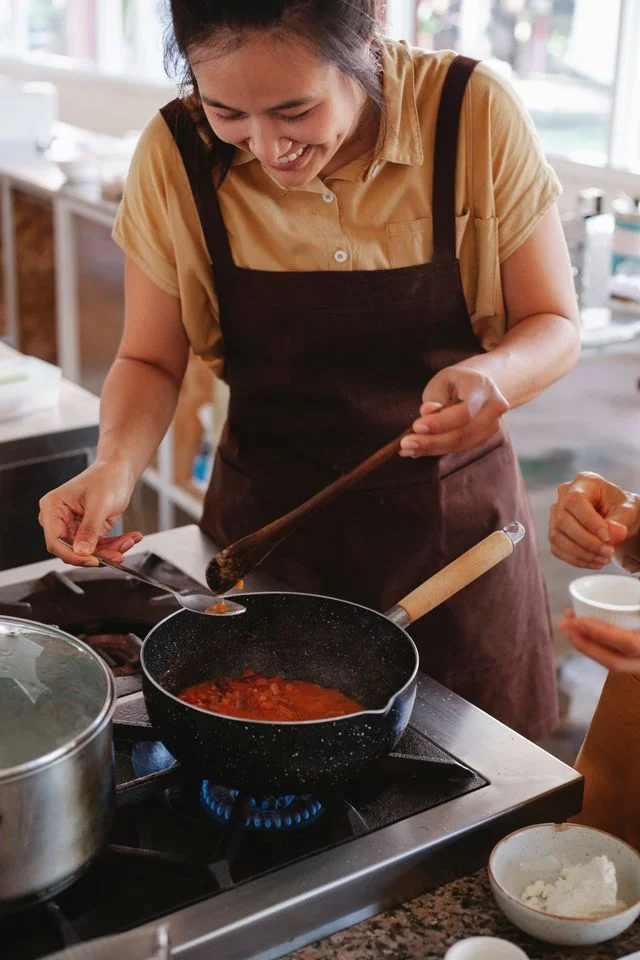
Cooking it yourself, at your own station. This isn’t a watch-the-chef-do-it class: you’re behind the stove yourself. At most schools you choose from a list of dishes (think a soup, a curry, a stir-fry, and a dessert like mango sticky rice) and prepare them step by step under the guidance of a local cook.
Eating together. The best part: at the end, you sit down and eat everything you’ve made yourself.
In terms of duration, you can choose morning, afternoon, evening, or full-day sessions, usually lasting between three and five hours. Prices generally range from 30 to 50 US dollars per person, depending on the school, the number of dishes, and whether a farm visit is included. Nearly every school can accommodate vegetarian, vegan, or gluten-free requests, so don’t hesitate to mention this when booking.
How do you choose the right Thai cooking class from dozens of providers?
Chiang Mai has literally dozens of cooking schools, ranging from tiny family-run operations to large, streamlined businesses hosting multiple groups a day. To avoid getting lost in the options, pay attention to these points:
Group size. If you want an intimate class with plenty of personal attention, choose a school that deliberately keeps groups small. If you enjoy a bigger, more international group atmosphere, a school with more capacity is no problem at all.
Location: in the city or out in the countryside? Some schools are located in or near Chiang Mai’s old city, others sit twenty to thirty minutes outside town on an actual farm among rice fields. The latter often feels more authentic, but costs you a bit more travel time.
Market visit and own garden. Not every school combines both. Some skip the market and work only with produce from their own garden, others only do the market without an herb garden. For the full experience, pick a school that offers both.
Number of dishes and choice. Can you choose which dishes you make, or is the menu fixed? Most good schools let you pick from several options per dish category (soup, curry, stir-fry, dessert).
Suitability for children and beginners. Traveling with kids? Check the minimum age beforehand. Some schools warmly welcome families with young children, others set a minimum age of ten.
Reviews and reputation. Look beyond the average rating. Read a handful of recent reviews to get a feel for the atmosphere, the organization, and whether the school delivers on its promises.
Extras. Do you get a recipe booklet to take home? Is there a certificate? Is pickup and drop-off included for free? These small details are what turn a nice class into an unforgettable experience.
With these criteria in mind, we’ve highlighted two cooking schools that each do things slightly differently, but both score excellently on quality, organization, and overall experience: Grandma’s Home Cooking School and Mama Noi Cookery School.
Grandma’s Home Cooking School vs. Mama Noi Cookery School
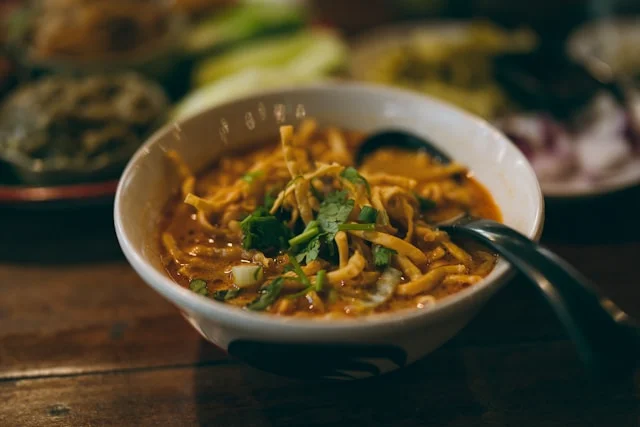
Both schools rank among the best-reviewed cooking classes in Chiang Mai, but the atmosphere and experience differ quite a bit. Here’s how the key features compare.
| Feature | Grandma’s Home Cooking School | Mama Noi Cookery School |
|---|---|---|
| Atmosphere | Rustic and rural, like visiting family on the farm | Lively and atmospheric, with Lanna lanterns and decoration, a slightly more “organized” feel |
| Group size | Small, often even (nearly) private | Small to medium, up to around 15 participants per session |
| Market visit | Extensive market visit included (morning, afternoon, and full-day sessions) | Market visit included, sometimes slightly shorter on certain sessions |
| Own herb garden/farm | Own organic farm with rice fields, herb garden, chicken coop, and mushroom hut | Own organic garden with kaffir lime, morning glory, and Thai basil, plus resident tortoises |
| Suitable for beginners | Yes, also great for families with young children | Yes for adults and older kids; not suitable for children under 10 to actively cook |
| Authenticity | Feels very authentic: a real farm out in the countryside, outside the city | Authentic yet accessible; located more centrally than a true countryside farm |
| Setting/surroundings | Rice fields, wooden pavilions, and a rural, green environment | Atmospheric, decorated garden with lanterns, tortoises, and an air-conditioned kitchen option |
Why choose Grandma’s Home Cooking School?
Grandma’s Home Cooking School is located in Saraphi district, about twenty minutes outside Chiang Mai, and you feel it immediately in the atmosphere. Instead of a kitchen in the middle of the city, you cook here amid the rice fields on a real organic farm. You’re picked up at your hotel, first stop by a local market where your instructor walks you through the stalls, and then drive on to the farm itself.
What makes Grandma’s so special is the farm experience itself. You walk through the herb garden, collect your own eggs from the chickens, and on some sessions you can even pick mushrooms in their own mushroom hut. Reviewers regularly call it one of the most authentic cooking classes in the city, precisely because it feels just that bit less touristy than the bigger schools in town.
You choose from multiple options: a soup, a curry, and a stir-fry (like Pad Thai), rounded off with mango sticky rice for dessert. In the full-day version you even learn how to make your own coconut milk using a traditional wooden grater. Groups stay small, and with a bit of luck you might even get an (almost) private class. That makes Grandma’s ideal if you’re looking for a quiet, rural experience with plenty of personal attention, and it’s also a great choice for families with children.
Check availability and book your place at Grandma’s Home Cooking SchoolWhy choose Mama Noi Cookery School?
Mama Noi Cookery School sits more centrally than Grandma’s, in the Thasala neighborhood right by Chiang Mai’s old city. That means less travel time, yet a surprisingly green setting: the school has its own six-acre garden, full of kaffir lime trees, morning glory, and Thai basil. Along the way you’ll also get cheerful company from the resident tortoises that roam freely around the grounds.
Here too, the class starts with a visit to the local market, followed by a walk through the garden where your instructor explains which herbs and vegetables end up in which dishes. Then you get to work at your own cooking station and typically prepare five dishes: a soup, a curry, a stir-fry, mango sticky rice, and Thai tea. At the end, you take home a recipe booklet and a certificate, two nice souvenirs you won’t automatically get at Grandma’s.
Mama Noi is a popular choice among travelers who want a bit more comfort: you can, for example, upgrade to a fully air-conditioned kitchen, and the grounds are beautifully decorated with Lanna lanterns, which look especially lovely in the evening. The school works with groups of up to fifteen participants, so you’ll never be in a massive crowd, though it feels slightly less “private” than at Grandma’s. Just keep in mind that children under ten aren’t allowed to cook themselves, though they’re welcome to come along and watch.
Check availability and book your place at Mama Noi Cookery SchoolPractical tips before you book
It’s best to book your cooking class early in your trip, ideally a few days to a week in advance. Both schools above are popular and fill up quickly, especially during high season (November through February). Coming with a big appetite? Don’t eat too much beforehand, since you’ll be tasting plenty of dishes at the end, and portions are often bigger than expected. Wear comfortable clothing you don’t mind getting a splash of oil or curry sauce on, and bring your camera, since both locations are perfect for photos among the green gardens and wooden pavilions.
Frequently asked questions about Thai cooking classes in Chiang Mai
How much does a Thai cooking class in Chiang Mai cost on average?
Expect to pay around 30 to 50 US dollars per person, depending on the school, the length of the class, and whether a farm visit is included.
How long does a Thai cooking class take?
Most half-day sessions last between three and five hours, including the market visit, garden tour, cooking, and eating. Full-day courses last around seven to eight hours and often combine multiple dishes with extra activities like making your own coconut milk.
Do I need to already know how to cook to join?
No, not at all. Both schools are perfectly suited for complete beginners. You get step-by-step guidance for every dish, and instructors adjust to your skill level.
Is a Thai cooking class suitable for children?
That depends on the school. Grandma’s Home Cooking School welcomes families with children of all ages. At Mama Noi Cookery School, children under ten can come along but aren’t allowed to actively cook.
Can I take a vegetarian or vegan cooking class?
Yes, nearly every cooking school in Chiang Mai, including both schools above, can adapt dishes for vegetarians, vegans, or people with gluten intolerance. Just mention this when booking.
Will I be picked up from my hotel?
Yes, both schools offer free pickup and drop-off within about a five-kilometer radius of central Chiang Mai. If you’re staying further out, you can usually arrange a meeting point.
How many days in advance should I book?
Book at least a week ahead if possible, especially during high season. Both schools are popular and regularly sell out for the best time slots.
What’s the difference between a morning, afternoon, and evening class?
The main difference is what’s included: morning and afternoon sessions usually combine both the market and the farm/garden, while evening sessions sometimes spend a bit more time at the farm itself and less at the market. Always check what’s included in your chosen time slot when booking.
Thai cooking class: one of the best things you can do in Chiang Mai
Whether you choose the rural calm of Grandma’s Home Cooking School or the atmospheric, more centrally located garden of Mama Noi Cookery School, a Thai cooking class is guaranteed to be one of the best things you can do in Chiang Mai. You won’t just learn a few recipes, you’ll taste and experience Thai cuisine the way it’s been passed down for generations. Enjoy your meal!
As well as this excursion, there are many other fascinating excursions available from Chiang Mai. Take a look at our feature article The 10 best excursions from Chiang Mai (2026).
Haven’t booked a hotel in Chiang Mai yet? Check out our guide to the best hotels in Chiang Mai.


