Published on 10 November 2026.
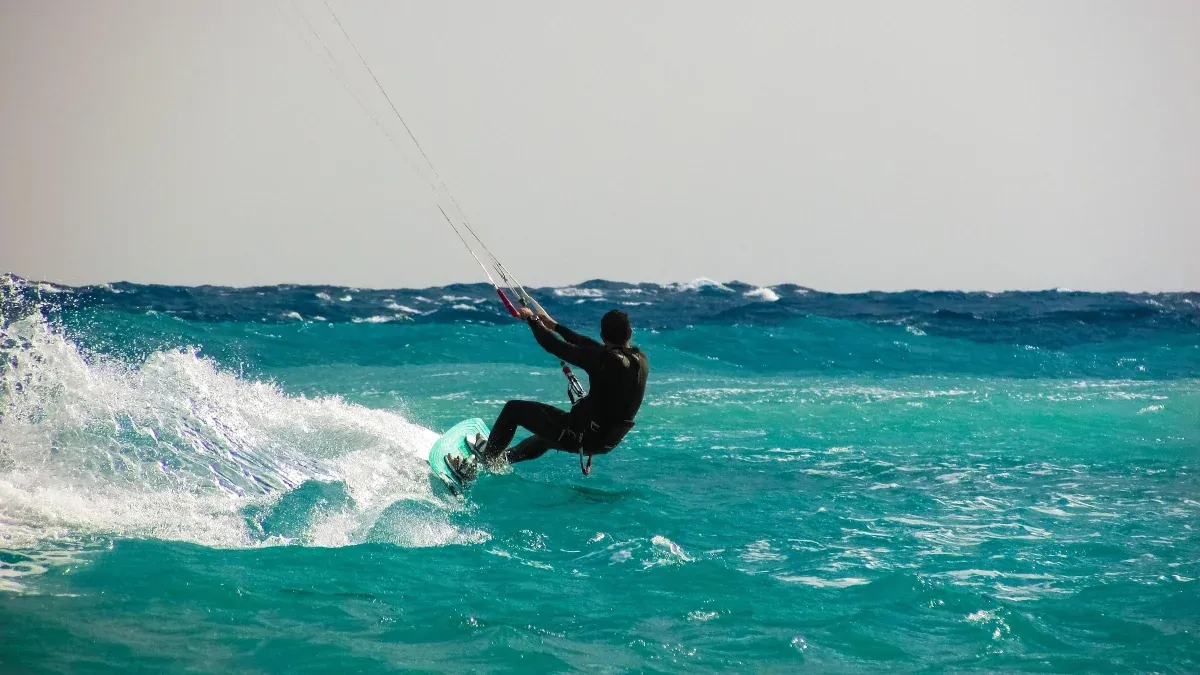
If you walk along the Hua Hin promenade in season, you see them straight away: dozens of kites above the sea, from the center to beyond Khao Takiab. Hua Hin is not called the kitesurfing capital of Thailand for nothing: nowhere in the country does the wind blow so long and so reliably, and the shallow, flat water off the coast is a dream to learn in. In this guide you’ll read when to come, how the lessons work and what it costs.
Tip: This article is part of our larger guide to excursions in Hua Hin and Cha-Am. Read that guide too for the other top excursions!
Table of ContentsToggle Table of Contents
Why is Hua Hin so good for kitesurfing?
Three reasons. First, the season: Hua Hin has the longest wind season in Thailand, from November through April, thanks to two alternating wind systems. Second, the conditions: the water off the beach is shallow and the beach is wide and sandy, without rocks or coral, so beginners can practice safely. And third, the infrastructure: there are several professional schools with international certification on the beach, all season long.
The wind season in brief
- November through January: The northeast monsoon brings wind of around 8 to 20 knots, in spells of several days in a row. The coolest and driest period, coinciding with the tourist high season.
- February through April/May: The thermal sea breeze takes over: almost every day the wind picks up from early afternoon to 12 to 20 knots, dying down again towards sunset. Many kiters find this the nicest period: warm, predictable and flat water.
- May through October: The southwest monsoon brings gusty, offshore wind; no lesson season. Hua Hin is then simply a beach destination again.
Learning to kitesurf: how it works
The standard is a three-day beginner’s course (around 9 to 12 hours of lessons): day one flying the kite and safety on the beach, day two body-dragging in the water, day three your first meters on the board. The schools work with small groups or private lessons, radio helmets and gear in all sizes; after the course you can rent gear under supervision and keep practicing on your own. If you already kite, you rent by the hour or by the day and head straight out on the water.
Practical tips
- Book your lesson in advance in the peak months. December through March the schools are full; reserving a week ahead avoids disappointment.
- Plan lessons in the afternoon (February to April). The thermal wind only kicks in from around one o’clock; mornings are then for the beach or an excursion.
- Protect yourself from the sun. Three hours of lessons on the water is more sun than you think: a long-sleeved rash vest and waterproof sunscreen are no luxury.
- Not a kiter, but curious? In season the beach between the center and Khao Takiab is a free spectacle; we regularly stopped to watch the kites.
Prices and duration
For a three-day beginner’s course, count on about 11,000 to 15,000 THB, including all gear; a single trial lesson or a day’s rental costs well below that. Private lessons are more expensive but faster. Compared with kite destinations in Europe the prices are friendly, and the season here is more than twice as long.
Frequently asked questions about kitesurfing in Hua Hin
Is kitesurfing in Hua Hin suitable for complete beginners?
Yes, this is actually one of the best places to learn in Asia: shallow water, a wide sandy beach, reliable wind and professional schools. Most beginners ride their first meters on the board after three days of lessons.
What is the best month to kitesurf in Hua Hin?
For the most reliable wind: December through March. If you want flat water and daily thermal wind, choose February through April. Outside November through April there is no lesson season.
Can you also kitesurf in Pranburi?
Yes, the coast near Pranburi is Hua Hin’s quieter sister spot, with the same wind and fewer people on the water; some schools operate in both places. If you are staying there, also see our guide to hotels at Pranburi & Khao Tao.
Do I need to stay in a specific part of Hua Hin for kitesurfing?
The schools are spread along the beach from the center to beyond Khao Takiab, so almost any beach hotel will do. A hotel on the southern part of the beach is handy; that is where the water is calmest and there is the most space. See our guide to hotels at Khao Takiab and Nong Kae.
Conclusion
Kitesurfing is the argument for not dismissing Hua Hin as just a family resort: the longest wind season in Thailand, ideal learning water and schools that have made it their craft. Book your course in advance, plan it in the wind season and keep your afternoons free. More inspiration? See our complete guide to all excursions in Hua Hin and Cha-Am.