The limestone cliffs of Railay and neighbouring Tonsai are among the most famous climbing areas in the world: hundreds of routes above white sand and turquoise sea, with climbers from all corners of the globe who sometimes stick around for weeks. The great thing is that you don’t need any experience at all to try it yourself. In this guide, you’ll find out how a beginner course works, what it costs, and what advanced climbers can expect.
Tip: This article is part of our larger guide to the best excursions in Krabi. Read that guide too for the other top excursions and practical tips!
Check out the rock climbing excursionsAt a Glance
Price: from ± 1,000 THB p.p. (half day, group) to ± 3,500 THB p.p. (private guide)
Duration: half day or full day, equipment and insurance included
Departure: Railay (by longtail from Ao Nang or Ao Nam Mao)
Best for: complete beginners to advanced climbers, no experience needed
Why Is Railay Such a Famous Climbing Area?
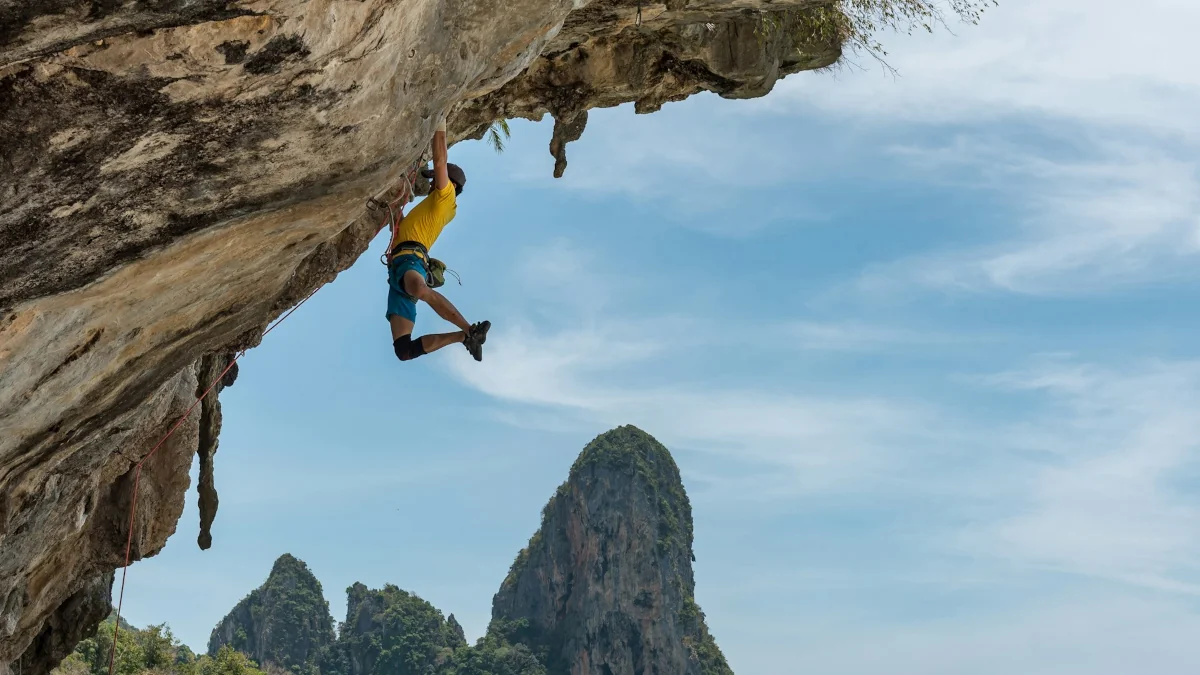
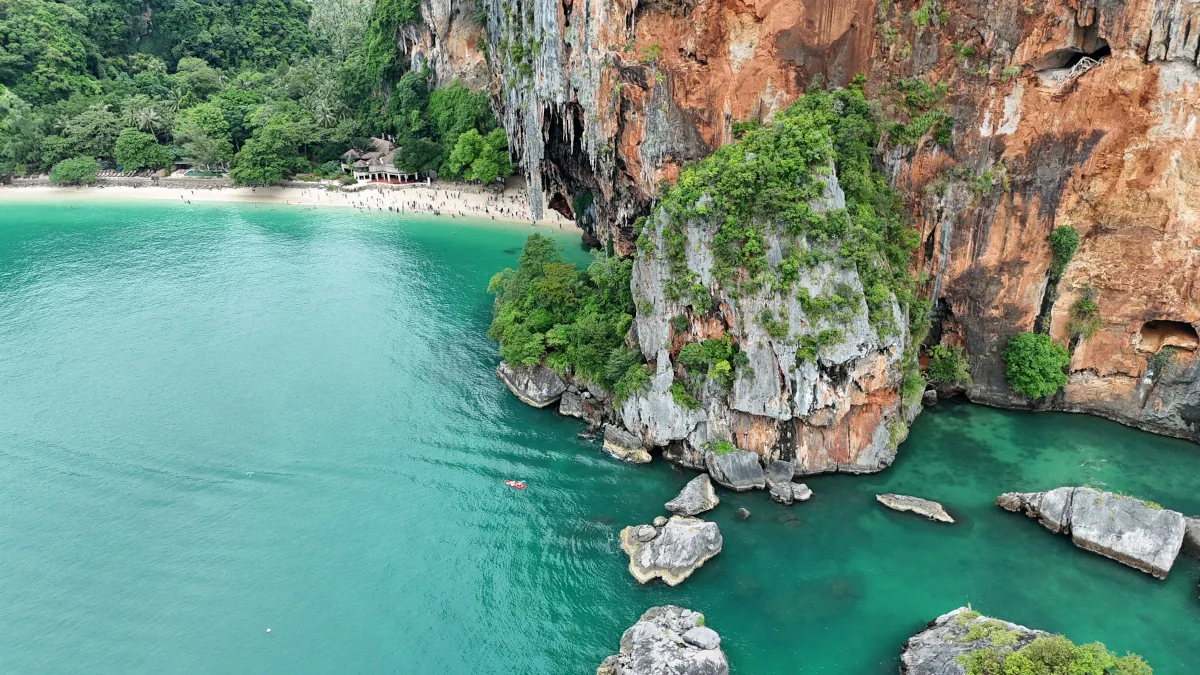
Railay’s limestone is ideal climbing material: solid, jagged and full of holds, with walls that rise from beach level to well above the jungle. There are hundreds of bolted routes across every difficulty grade, many with views over the Andaman Sea. On top of that, everything is reachable on foot: you walk from your hotel or the beach to the climbing area in a few minutes. That combination of quality, views and convenience is something you’ll find almost nowhere else in the world.
Rock Climbing for Beginners: How It Works
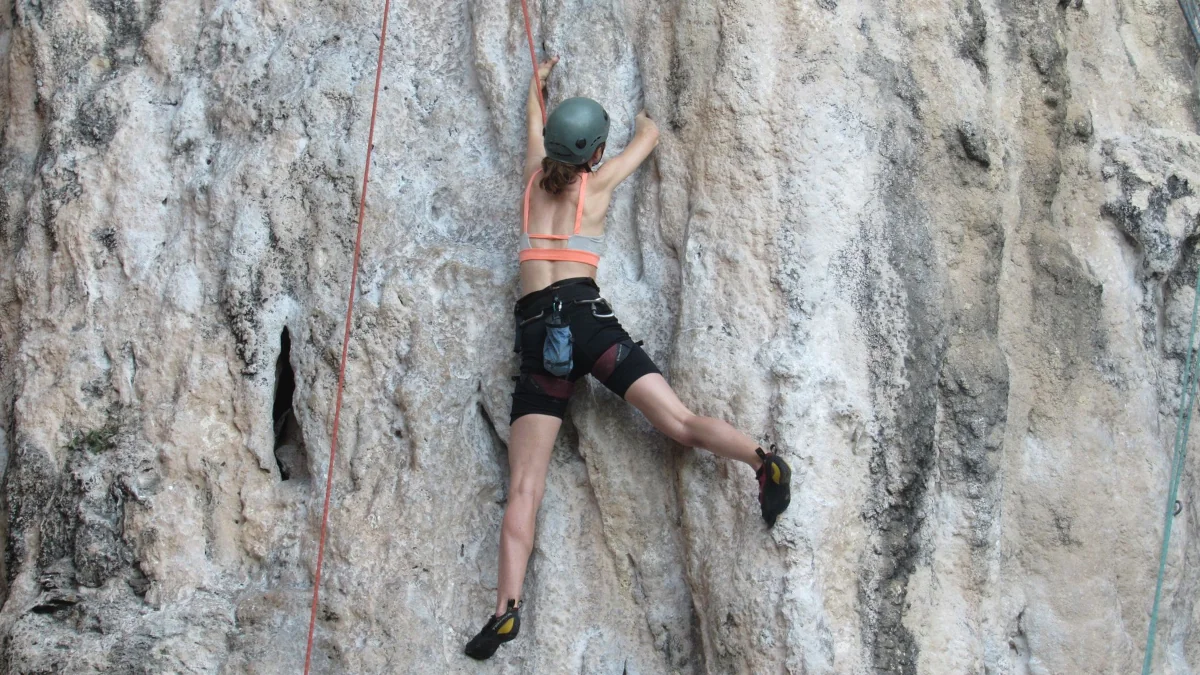
The climbing schools on Railay (mainly around Railay East) run daily courses for complete beginners. A half-day course starts with an introduction to the equipment and technique, after which you climb your first real routes under guidance in a quiet beginner area; the guide belays you and selects routes to match your level. Almost everyone is metres above the beach for the first time within an hour.
Anyone who’s caught the bug can go further with a full-day course (more routes, first belaying techniques) or a multi-day course where you learn to lead climb. For the daring, there’s Deep Water Solo: climbing without a rope above deep sea water from a boat, where every fall is a dive.
Practical Tips
- Book at least a few days ahead in high season. From November through April, the morning courses (the coolest and best hours) fill up quickly.
- Climb in the morning or late afternoon. In the middle of the day, the sun beats directly on many sectors; the schools plan their courses around this by default.
- Wear sporty clothing; equipment is provided. Climbing shoes, harness and helmet are included with every course. Just bring water, sunscreen, and possibly gloves for the rough limestone.
- Check your travel insurance. Climbing with a recognised school is insured through the course itself, but not every travel insurance policy covers climbing for the rest of your trip.
Prices and Duration
A half-day group course costs around 1,000 to 2,000 THB per person, a full day around 1,800 to 2,500 THB, each including equipment, guide and insurance. A private guide costs 2,500 to 3,500 THB per person. Multi-day courses and climbing packages are priced differently by each school. The best climbing season runs from November through April, when the rock is dry; climbing continues as normal in the rainy season, but some sectors get too wet.
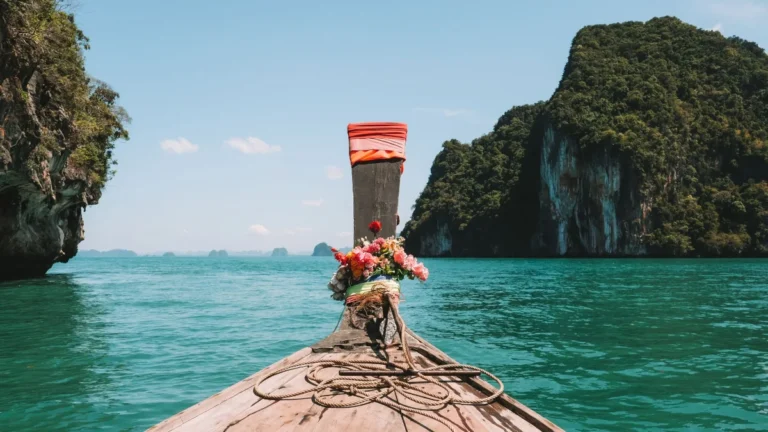
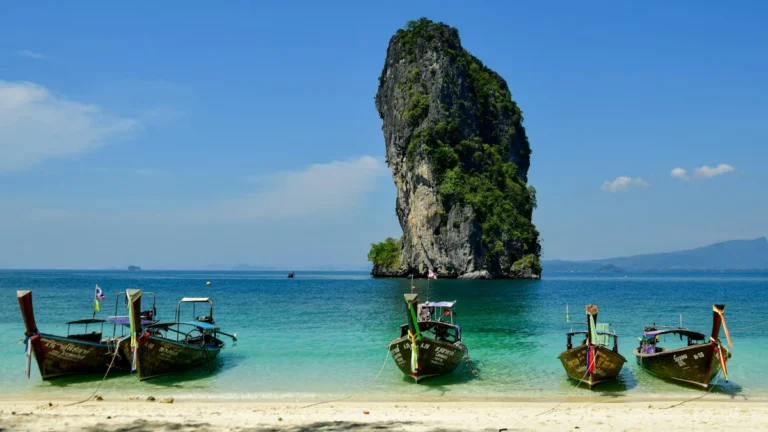
You reach Railay by longtail boat from Ao Nang or Ao Nam Mao. Consider staying overnight so you can climb early and late; check out our guide to hotels on Railay Beach for the best options.
Frequently Asked Questions about Rock Climbing in Railay
Can I go rock climbing in Railay without experience?
Yes, the beginner courses are made specifically for this. The guide handles the belaying and chooses routes to match your level; a normal level of fitness is enough. Most participants have never climbed before.
From what age can children take part?
Most schools take children from around 6 to 8 years old in family courses, with adapted routes and equipment. Thanks to their weight and flexibility, children are often surprisingly good climbers.
What is Deep Water Solo?
Climbing without a rope on cliffs above deep sea water: you sail out by longtail to the rock, climb as high as you dare, and jump or fall into the sea. Only suitable for confident swimmers; climbing experience isn’t strictly necessary.
What’s the best time of year to climb in Railay?
November through April: dry rock, less humidity and stable weather. You can also climb in the rainy season, but plan flexibly then; after rain, some routes are unclimbable for a day.
Conclusion
For many travellers, rock climbing in Railay turns out to be the highlight of their Thailand trip in hindsight: a world-famous climbing area where, as a complete beginner, you scale your first cliff within a single morning, with the Andaman Sea beneath you. Book a morning course, stay a night on Railay if you can, and let yourself be surprised by how quickly you get used to hanging metres above the beach.
Check out the rock climbing excursions