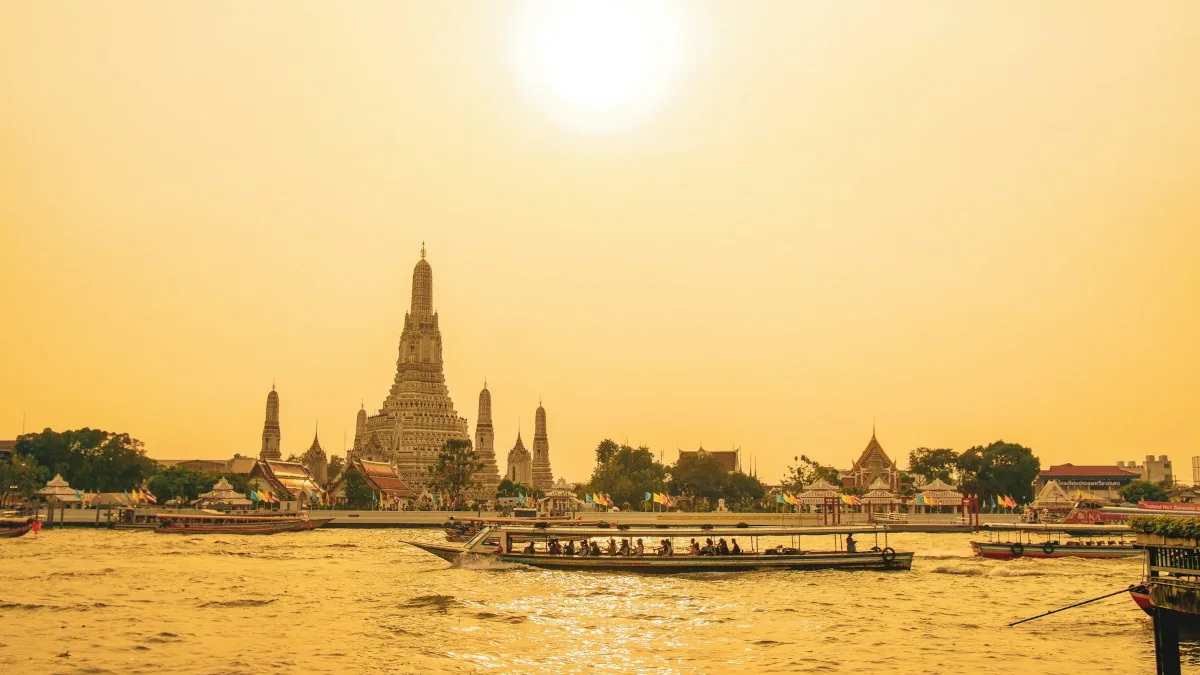
Best & worst months to visit Thailand, region by region
Thailand is warm all year, but rain, heat and haze move differently across the country. The Andaman coast, the Gulf islands and the north each run on their own calendar, so “high season” isn’t the same date everywhere.
Good / shoulder months
Worst months
Swipe the table sideways to see all 12 months →
| Destination | Jan | Feb | Mar | Apr | May | Jun | Jul | Aug | Sep | Oct | Nov | Dec |
|---|---|---|---|---|---|---|---|---|---|---|---|---|
| Bangkok | ||||||||||||
| Hua Hin | ||||||||||||
| Koh Samet | ||||||||||||
| Koh Chang | ||||||||||||
| Chiang Mai | ||||||||||||
| Chiang Rai | ||||||||||||
| Phuket | ||||||||||||
| Krabi | ||||||||||||
| Koh Lanta | ||||||||||||
| Khao Sok | ||||||||||||
| Koh Samui, Phangan & Tao |
The Gulf islands (Koh Samui, Koh Phangan, Koh Tao) run on the opposite monsoon to the rest of Thailand: their wet season falls in October and November, while the Andaman coast and the north are at their driest. In Chiang Mai and Chiang Rai, March and April are dry but affected by seasonal agricultural burning, which brings haze and poor air quality. Koh Lanta and Khao Sok see heavier, longer low-season closures than nearby Krabi and Phuket. Koh Samet is one of the driest islands in Thailand, so it often works well outside high season too. Koh Chang, by contrast, is one of the wettest places in the country: from June to September it rains heavily and fewer boats run to Koh Mak and Koh Kood. Weather varies year to year, so treat this as a general guide rather than a guarantee.
When is the best time to visit Bangkok and Thailand?
Any month is actually suitable for travelling to Bangkok and Thailand, but there are a few things you should know about the climate. Thailand is a great place to visit all year round, but it is worth noting that the country has different seasons.
April is one of the hottest months of the year, and September is often the wettest month of the year. December is usually one of the coolest months of the year.
Thailand is a great place to visit all year round, but it is worth noting that the country has different seasons.
The warm or hot season (March to May); during this period, it is warm, with temperatures of around 35 degrees Celsius.
The dry and cool season (November to February) is the ideal time to explore Thailand; there is very little or no rain and it doesn’t get too hot.
The rainy season (June to October) is the most beautiful and greenest time of year in Thailand. Although it does rain during this period, it doesn’t rain all day. The often heavy downpours are usually limited to just a few hours.
As Thailand is such a large country, there are quite a few differences between the various regions: the Central Plains and the East, the North and North-East (Isaan), and the South of Thailand.
Monsoons
Two monsoon currents determine the climate in Thailand. The monsoon refers to the periodic wind currents in Southeast Asia that can bring rain or drought. There are two monsoon currents:
1. The south-west monsoon: from June to October, this brings rain clouds in from the Indian Ocean. There can be downpours every day, usually short, heavy showers.
2. The north-east monsoon: this blows over land from November to March, bringing dry, cool air.
These monsoon seasons also determine the agricultural activities and the religious calendar of the Thai people. The Thai people believed that health and happiness depended on the rice cycle, the planting and harvesting of rice, which in turn was determined by the monsoon rains during these seasons.
One example of the monsoon’s influence on the religious calendar is the celebration of the Songkran festival. The traditional New Year celebration in Thailand, the Water Festival or Songkran, is held from 13 to 15 April. The Thai people mark the end of the dry and hot season. Throwing water is said to bring good luck and ensure a fruitful season with plenty of rain. April is, in fact, the hottest and driest month in Thailand. Throwing water at one another also literally brings relief from the heat.
The monsoon winds are responsible for the three weather seasons in Thailand.
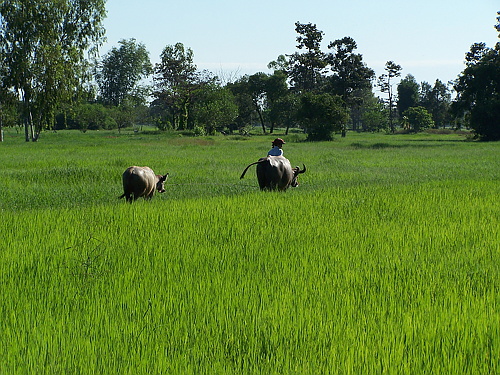
Rainy season (June to October)
This might seem like an unappealing time of year to visit Thailand, but that’s not actually the case. Even during the rainy season, the sun shines almost every day. The showers can be very heavy, but they are often short-lived and the sky clears up again quickly afterwards.
Flooding can occur. Even Bangkok is not immune to flooding. There is also a fairly significant difference in rainfall levels between the southern peninsula and the central and northern parts of Thailand.
The southern peninsula receives almost twice as much rainfall. Due to the monsoons, it is often impossible to sail to some of the beautiful islands. This is because some islands are closed to visitors to prevent damage and to allow them to recover from the tourist season.
Why we choose Koh Samui over Phuket
One advantage of the rainy season is that there is less dust and air pollution.
The rain has also brought out the best in nature, which is becoming increasingly green. The rivers also have plenty of water for lovely boat trips.
The rainy season is also the low season for tourism in Thailand.
Dry and cooler season (November to February)
This is the peak season in Thailand, with the busiest and most expensive months of the year. The weather becomes more stable, there is generally little rain, and the temperatures are pleasant.
Despite the crowds, the cool season (November to February) is an excellent time to visit and explore Thailand. There are many festivals, such as the traditional Loy Krathong festival, and for the Thai people, too, these months are all about relaxation.
Warm or hot season (March to May)
At this time of year, Thailand is dry and hot. For many visitors, it can be too hot… The countryside also looks dry and parched during this period. However, it is lovely to be able to experience Songkran (the water festival).
During these months, it’s very pleasant to be on the beach with the cooling sea breeze or in the mountains in the north of the country. It can get quite warm in Bangkok too, but a boat trip along the Chao Phraya River and the canals, or even a cycle ride, can offer some relief from the heat.

Thailand is always (nicely) warm
A trip to Thailand means you’ll always have to cope with the heat, and depending on the time of year and the location, it can also be (very) humid and muggy. April is the hottest month in Thailand; after that, the rainy season begins across almost the whole country, causing temperatures to drop slightly.
For all these reasons, we believe you can travel to Thailand at any time of year, as every season has its pros and cons. In that case, your personal preference will determine the best time to visit Thailand.
We hope you have a good trip!
Which hotel to stay in Bangkok?
Check out our main article on Hotels in Bangkok. In addition to our favourite hotels and info about the Bangkok neighbourhoods, you will also find all the information about transport, the best booking times, the best booking platforms and our selections in 3-star, 4-star and 5-star hotels.
See the Best Hotels in BangkokAll Thailand Travel Tips